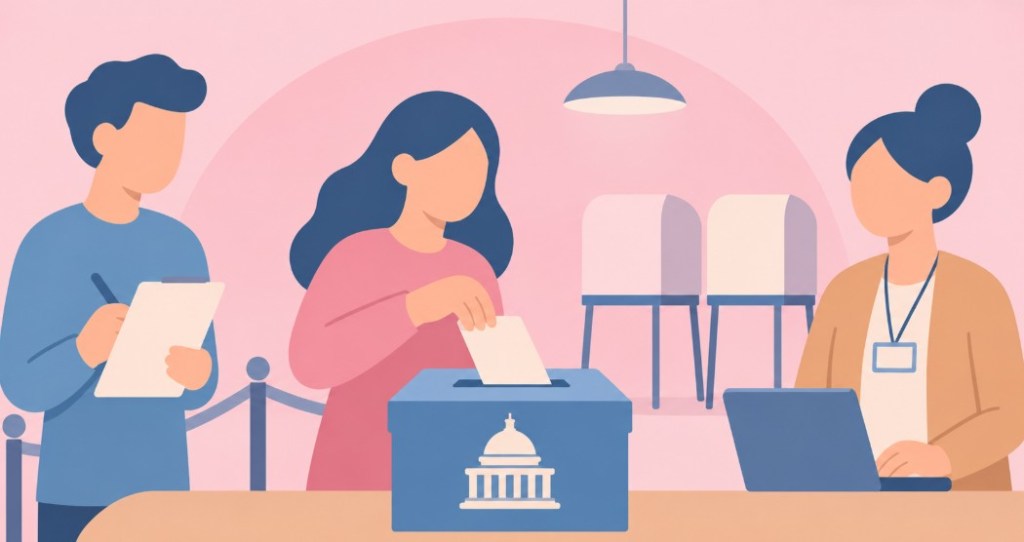
My son voted for the first time this election. The poll workers made a point of celebrating first-time voters. He got a special sticker and people cheered.
On Tuesday he stayed up watching the results come in. He was invested in the outcome because he had taken part. His vote was in the count.
That link between taking part and caring about the result is not new. It is one of the oldest observations about American civic life, and it is one of the reasons why associations work.
Alexis de Tocqueville was a young French aristocrat who came to the United States in 1831 to study American prisons. He went home and wrote a more expansive treatise, Democracy in America, published in two volumes in 1835 and 1840. People in the association world quote him often.
What struck Tocqueville most was how often Americans joined together. “Americans of all ages, all conditions, and all dispositions constantly form associations,” he wrote. He described groups formed to address all aspects of civic life. Where France turned to the government and England turned to a man of rank, Americans formed an association. (Read a relevant excerpt from the 1840 Henry Reeve translation.)
He also explained why these groups mattered. In a democracy, no single citizen has much power alone. In his words, people “become powerless if they do not learn voluntarily to help one another.” Associations were how ordinary people gained the strength to act. He went as far as calling the science of association “the mother of science,” the skill that all other progress depends on.
Tocqueville also saw associations as practice for self-government. He believed voluntary groups are where people learn initiative, cooperation, and responsibility toward others. Members learn to agree on a goal, persuade one another, accept a group decision, and follow through. A democracy asks the same things of its citizens.
People care about what they help build. A member who reviews abstracts for the annual meeting experiences the program differently. A volunteer who serves on a committee acts as an ambassador for the association to colleagues. A member who signs a letter to Congress follows the bill. Participation creates investment, and investment brings people back.
I love associations because I believe in the power of people acting together. I have spent my career in them, as a volunteer and as a CEO. I have watched members do together what none of them could do alone. They set standards for their fields. They train the next generation. Their missions help the the wider society.
None of that depends on a single leader. It depends on members who show up.
Voting matters but it happens on one day every two years. The habit of acting together is built the rest of the time, in the groups we join. Associations are one of the best places to build it. Our job as leaders is to make taking part fulfilling and to notice when people do.
Where do you give back to your community?


Leave a Reply