Last week’s post about my recent CEO job search turned into the most-read post I have ever published. Several people who are actively searching reached out to let me know they appreciated my sharing the reality of a current search.
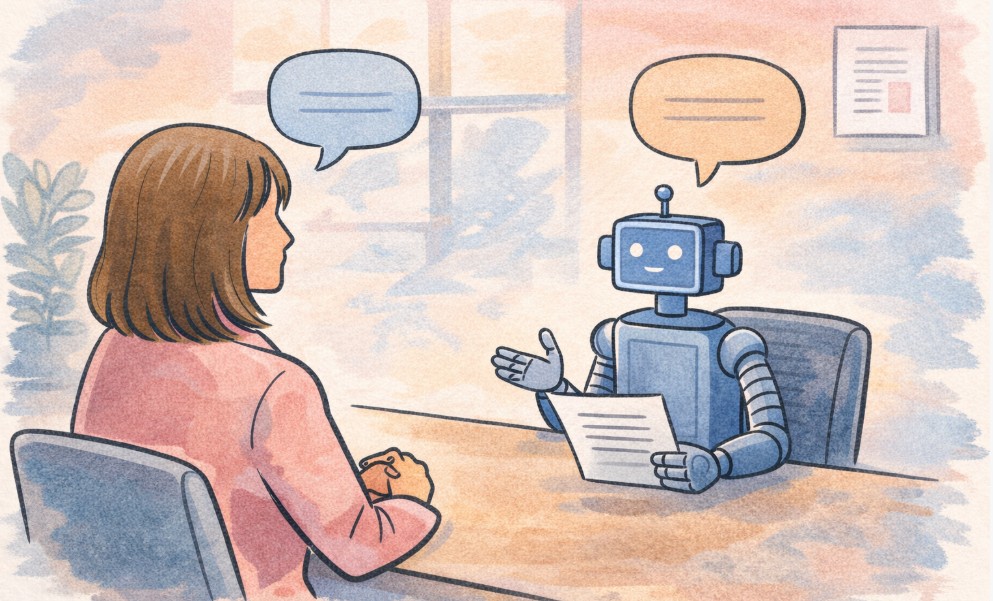
So this week, I thought it might be helpful to share some of the new things I tried over the last year that made the process easier and more effective. I am starting with the one that didn’t even exist as an option in my prior searches, using AI to help with interview prep.
I already knew practice helps me when prepping for any sort of public speaking. I do better when I rehearse my opening “tell me about yourself” and when I work my way through common questions out loud. I also knew my biggest barrier to improving oral presentations was that I hate watching myself on video. I can do it, but it is painful, and it triggers a spiral of self-critique that is not useful. I nitpick myself to death. I end up less confident instead of more prepared.
So I tried a different approach. I used ChatGPT as a practice partner. I asked it to generate interview questions in two buckets. The first bucket was the usual list: leadership style, a challenging team situation, a time I had to make a hard tradeoff, a board relationship that went sideways, etc. The second bucket was position-specific: questions tied to the organization’s priorities, the role’s scope, and the likely hot spots for the first year.
Then I recorded myself answering. I did not do this once. I did it in rounds, and I treated it like training, not like a one-time performance. After each round, I asked for feedback from AI.
The feedback was more useful than I expected. It showed me patterns I did not see in real time. For example, I often started strong and then drifted at the end. My conclusions were soft. It also made me realize when I was rambling. Halfway through an answer, I would realize I had one more point to make. Instead of pausing, I would talk my way to it, and that is when the hemming and hawing showed up.
So I changed two things. I started pausing before I answered, just long enough to decide where I was going, and then I laid that out in my opening sentence. I started closing every answer with purpose. and a clean last sentence. I made sure that I gave the AI “search committee” a clear takeaway. That simple discipline made my answers tighter and calmer.
The practice alone helped, but the practice plus targeted feedback helped more. By the time I practiced with real humans, I was no longer searching for words. I was refining. My stories were closer to the final version. The human practice became high-value polishing instead of basic assembly.
If you are in the middle of a search, consider trying this. Not as a replacement for humans, but as a way to get yourself to a stronger draft before you walk into the room.
What techniques do you use to prep for interviews?




Leave a comment